GEO vs SEO: What Changes for AI Search and What Stays the Same
Google says optimizing for AI features is still SEO. Here is what the research found, where studies disagree, and what is worth doing.
By David Johnson 7 min read
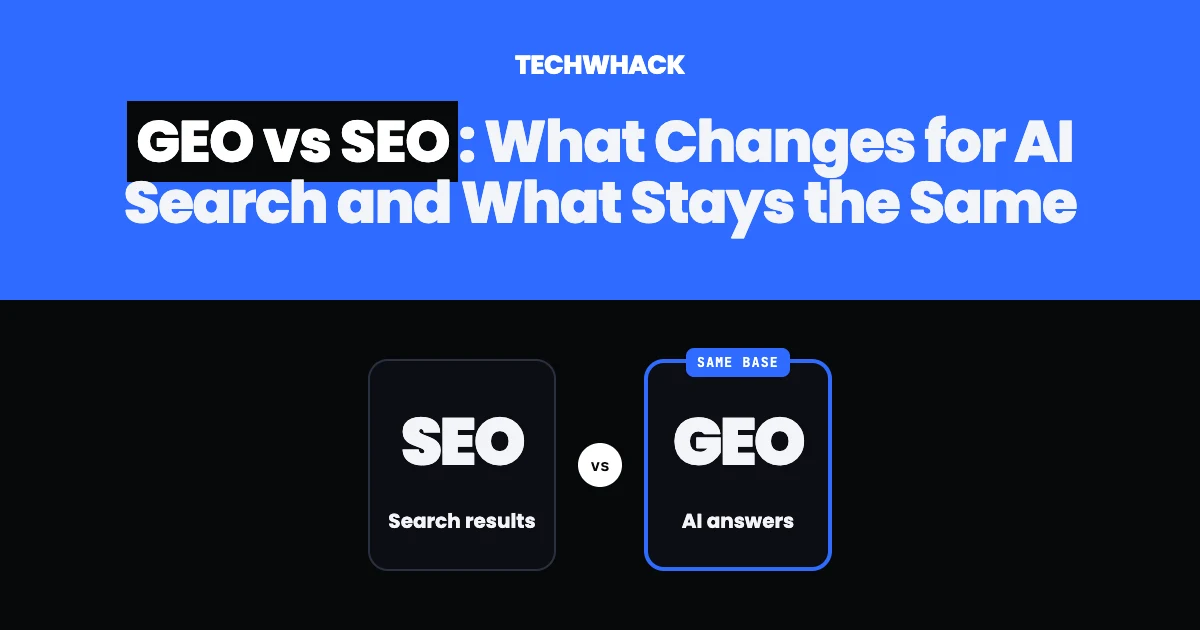
Generative engine optimization, or GEO, is the practice of making your content easy for AI tools like ChatGPT, Perplexity and Google's AI Overviews to retrieve and cite. Whether it is a separate discipline from SEO is still argued. Google says it is not. Researchers have found specific tactics that raise AI visibility, and independent studies disagree on how closely AI citations follow Google rankings.
This guide sets out what Google says, what the research found, where the evidence conflicts, and what is worth doing.
GEO, AEO and AI SEO mostly mean the same thing
You will see several labels: generative engine optimization (GEO), answer engine optimization (AEO), large language model optimization (LLMO) and AI SEO. Search Engine Land's guide treats them as essentially the same idea, and Google's own optimization guide uses AEO and GEO as the names circulating online for it. We use GEO for the whole group.
Google says optimizing for AI features is still SEO
Google's guide to generative AI features, last updated July 10, 2026, answers the question directly: SEO best practices still apply, because AI Overviews and AI Mode are rooted in Google's core ranking and quality systems. It describes two techniques behind them. Retrieval-augmented generation pulls relevant pages from Google's index to ground an answer, and query fan-out runs several related searches at once to gather more material.
The same guide lists things you can ignore for Google Search:
- llms.txt files and other special markup
- breaking content into small "chunks" for AI
- rewriting content just for AI systems
- chasing inauthentic mentions around the web
- over-focusing on structured data, which is not required for AI features
To appear at all, a page must be indexed and eligible to show with a snippet, and the site must be included in Search generative AI features in Search Console. Google's AI features documentation adds that there are no extra technical requirements. For the basics, our meta tag generator and SERP preview help you check how a page's title and description will look in results.
The research found three tactics that raised visibility
The original GEO study, published on arXiv in November 2023 and presented at KDD 2024, tested several content tactics on a benchmark of 10,000 queries. It reported visibility gains of up to 40% in a generative engine built on gpt-3.5-turbo, and up to 37% on Perplexity. The tactics that worked best were adding quotations, adding statistics and citing sources. Keyword stuffing scored below the baseline, and an authoritative tone showed no significant gain.
The sources tactic had mixed results by position: it raised the visibility of a source ranked fifth by 115.1% and cut that of the top-ranked source by 30.3%. The authors state that methods may need to change as engines evolve, and they did not test effects on search rankings. This is one study on one 2023 setup, so treat it as a lead worth testing, not a rule.
Do AI engines cite the pages that rank? It depends on the engine
Studies disagree, partly because they measure different engines and count differently:
- Ahrefs, July 2025: 76.1% of AI Overview citations came from the organic top 10 (1 million AI Overviews).
- Ahrefs, March 2026: an update found 37.9% across 863,000 keywords. Ahrefs says its parsing changed, so the two numbers are not directly comparable.
- seoClarity, October 2025: 32% of citations overlapped the top 10, while 44% came from outside the top 20.
- Moz, February 2026, AI Mode: about 88% of citations were not in the exact-query organic results.
- Ahrefs, other engines: only 12% of cited URLs from ChatGPT, Gemini and Copilot ranked in Google's top 10, against 28.6% for Perplexity.
- Ahrefs, Google's two features: AI Overviews and AI Mode cited only 13.7% of the same URLs.
The pattern across them is that ranking well helps in some engines and matters much less in others. A top-10 ranking is a good start for Google's AI Overviews and no guarantee anywhere else.
Schema did not help in one test, and mentions track with citations
Ahrefs tracked 1,885 pages that added JSON-LD structured data against 4,000 pages that did not, and found no meaningful lift in citations (AI Overviews down 4.6%, AI Mode up 2.4%, ChatGPT up 2.2%). That fits Google's own statement that no special schema is needed. If you still want it for rich results, our schema generator builds the markup.
On the other side, an Ahrefs study of 75,000 brands found that YouTube mentions (a correlation of about 0.74) and branded web mentions (0.66 to 0.71) tracked closely with AI brand visibility. Ahrefs notes this is correlation only. Another Ahrefs analysis of 17 million citations found AI assistants cite content that is about 25.7% newer than what organic results show, which is an average age and not proof that freshness causes citations.
What to do about it
- Keep doing SEO. Make pages crawlable, indexed and snippet-eligible. Everything else sits on top of that.
- Check the eligibility switch. Confirm your site is included in Search generative AI features in Search Console.
- Publish what others do not have. Google asks for a unique point of view, first-hand experience and non-commodity content. Original data and sourced statistics also match what the GEO study rewarded.
- Cite your sources and quote real people. Quotations, statistics and cited sources were the best performers in the research.
- Skip the shortcuts for Google. llms.txt, special markup and chunking are on Google's list of things you can ignore.
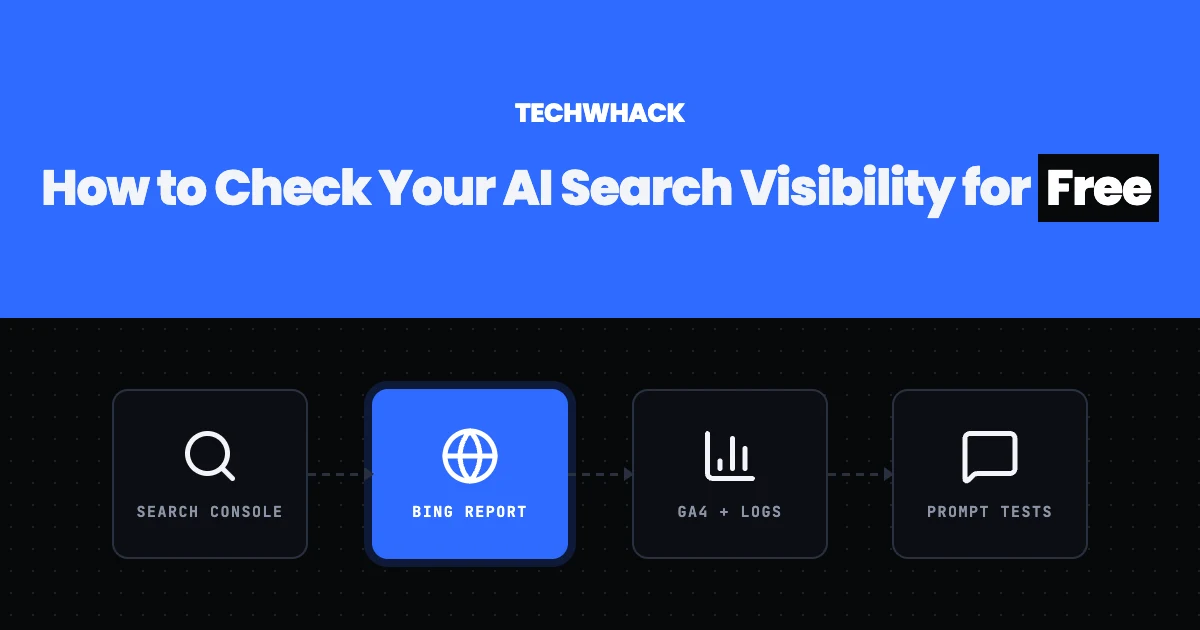
- Measure it. Search Console, Bing Webmaster Tools and Google Analytics each report part of the picture. We cover the free methods in our guide to checking your AI search visibility.
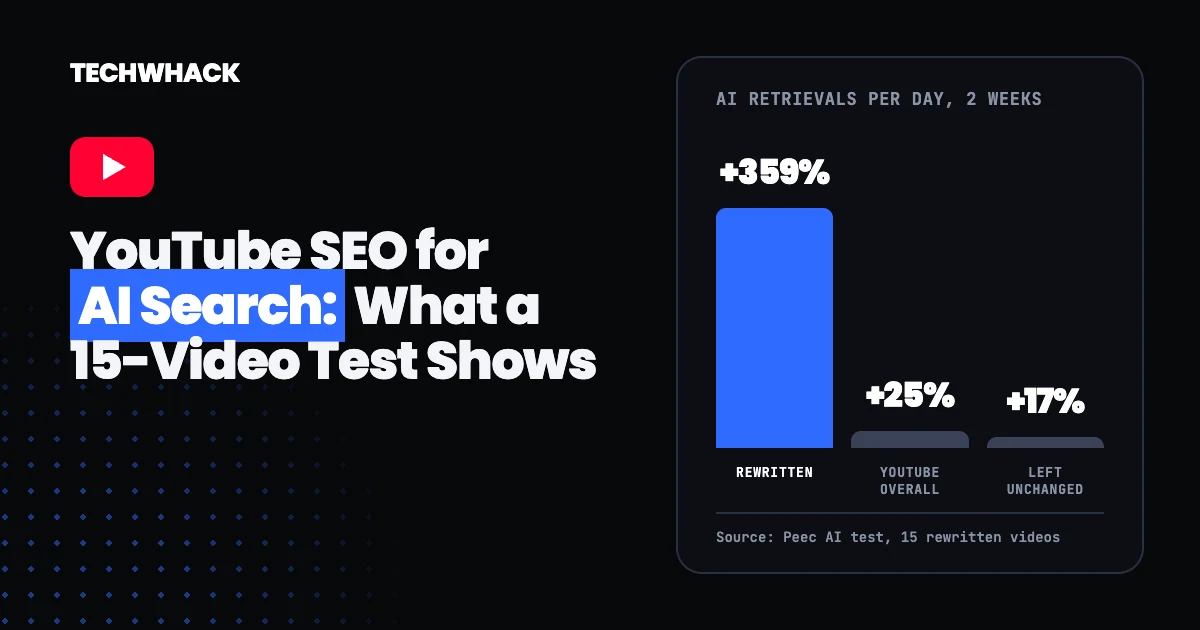
The same thinking extends to video. If you publish on YouTube, our guide to YouTube SEO for AI search covers what one small test did and did not show.
Common questions about GEO and SEO
Is GEO different from SEO?
Google says optimizing for its AI features is still SEO. Researchers have identified tactics, such as adding statistics and sources, that raised visibility in AI engines specifically, so the practical difference is a few content habits on top of the SEO basics.
Does llms.txt help you appear in AI answers?
Not in Google. Google says you do not need llms.txt or other special markup for Search, including its generative AI features. Google's John Mueller said in 2025 that no AI system was using llms.txt at that point, as Search Engine Roundtable reported.
Do I need structured data for AI Overviews?
No. Google says structured data is not required and no special schema is needed, and an Ahrefs test found no meaningful citation lift from adding it. It is still useful for rich results.
Do AI tools cite the pages that rank first?
Sometimes. Overlap with Google's top 10 ranged from about 12% to 76% depending on the engine and the study.
Follow topics, companies and writers from this story to see more like it in your feed and get email updates.
- David JohnsonWriter
 Continue with Google